
Copy.ai vs Rytr
Copy.ai is the better fit for go-to-market copy production and outbound workflows, while Rytr is stronger for budget-friendly short-form writing and idea generation.
Compare Signal may earn a commission when readers click partner links and convert. That does not change the editorial verdict, scoring logic, or the order of product analysis.
Choose by workflow fit
The first screen should help buyers decide in seconds, then the rest of the page backs up that answer with structured evidence.

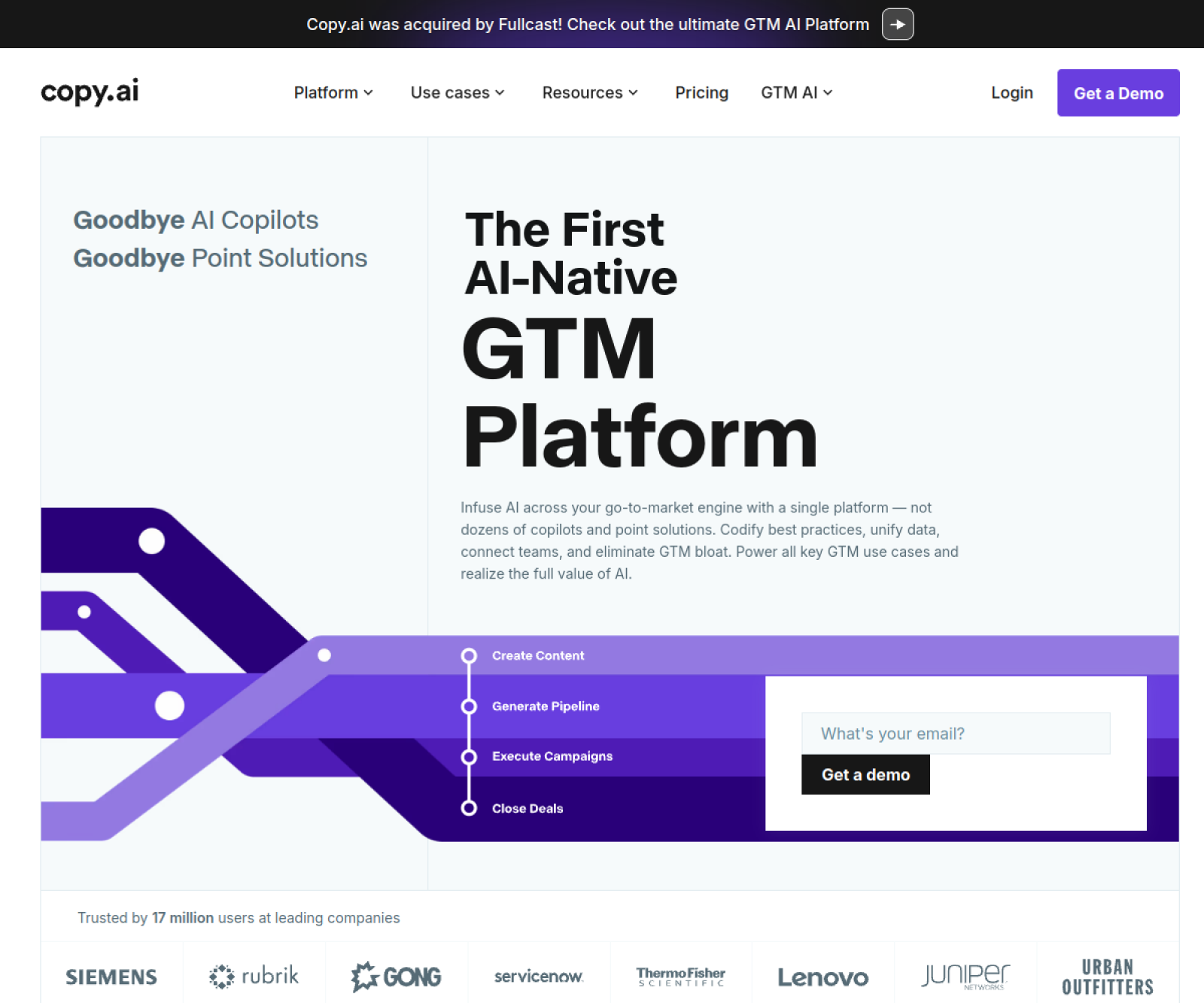
Copy.ai is the stronger fit for go-to-market copy production and outbound workflows.

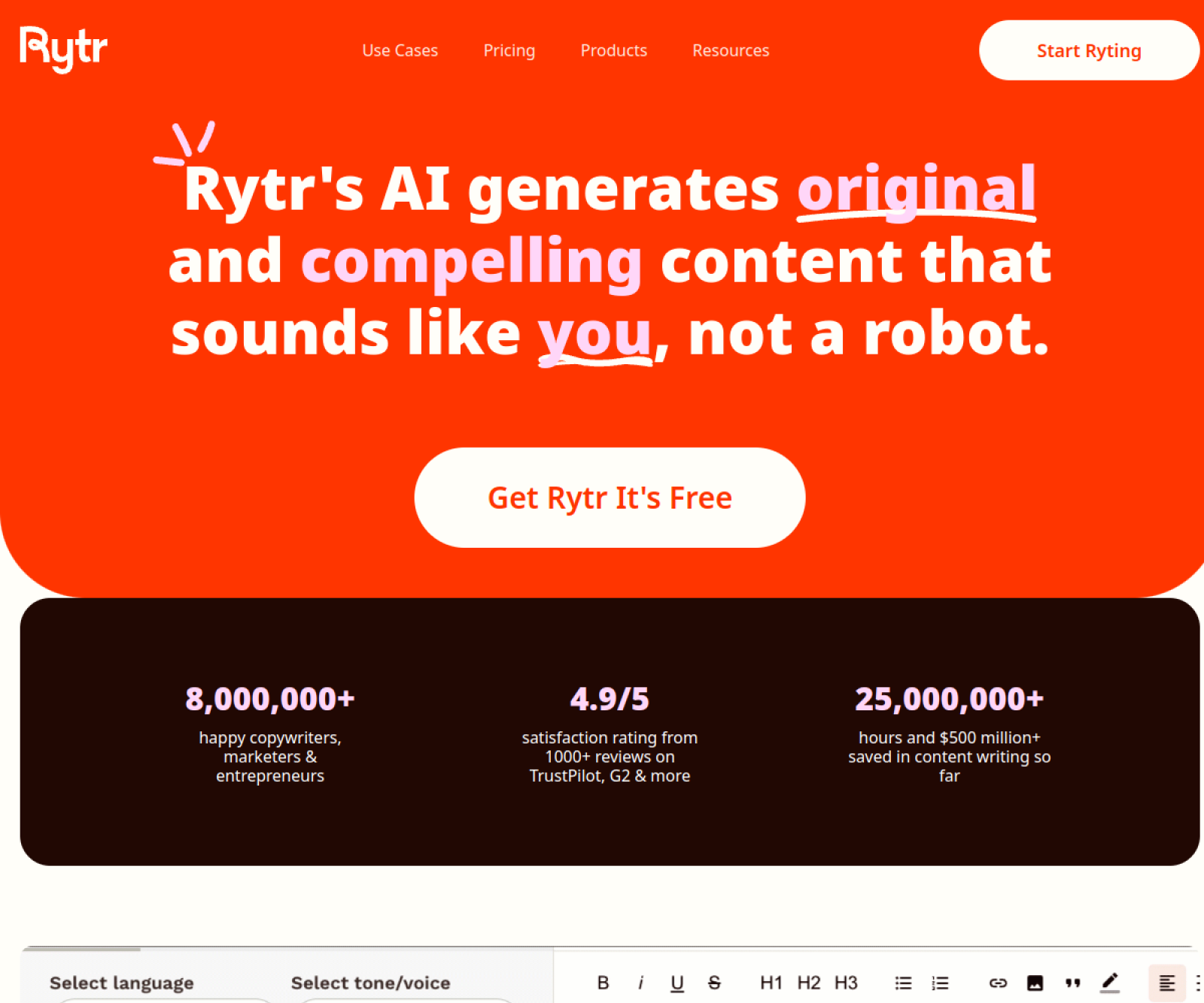
Rytr is the stronger fit for budget-friendly short-form writing and idea generation.
Copy.ai usually pulls ahead once ease of use matters more than the rest of the checklist.
Structured head-to-head
Facts stay deterministic and visible in the first render, while the surrounding narrative explains why the differences matter.
Pricing context without the clutter
Pricing cards stay outside the verdict and outside the CTA cluster so buyers can compare commercial fit without losing the main decision path.
Why each tool wins and where it gives ground
High-intent buyers trust pages more when the losing arguments are visible instead of being buried.
- Copy.ai stays competitive when the brief looks like go-to-market copy production and outbound workflows.
- The current positioning leans toward marketing rather than trying to be every tool for every team.
- It is easier to justify for marketers-led workflows than for generic all-purpose use.
- The strongest fit is narrower than broad marketing copy usually suggests.
- Pricing and scaling limits still need verification directly on the vendor site.
- If the buyer needs something outside the ai writing tools lane, the shortlist should widen before choosing this tool.
- Rytr stays competitive when the brief looks like budget-friendly short-form writing and idea generation.
- The current positioning leans toward budget rather than trying to be every tool for every team.
- It is easier to justify for writers-led workflows than for generic all-purpose use.
- The strongest fit is narrower than broad marketing copy usually suggests.
- Pricing and scaling limits still need verification directly on the vendor site.
- If the buyer needs something outside the ai writing tools lane, the shortlist should widen before choosing this tool.
Decision summary
This section is the short answer most visitors are looking for. The rest of the page exists to make that answer defensible.
Copy.ai is the stronger fit for go-to-market copy production and outbound workflows.
Rytr is the stronger fit for budget-friendly short-form writing and idea generation.
The decision often comes down to ease of use: Copy.ai rates fast onboarding, while Rytr lands at fast onboarding.
Common pre-purchase questions
The FAQ is intentionally compact and rendered directly in HTML for search and buyer clarity.
Which is easier to launch: Copy.ai or Rytr?+
Copy.ai has the stronger ease-of-launch signal in the current snapshot. Teams that need a faster time-to-publish usually start there.
How should I choose between Copy.ai and Rytr?+
Start with the real job of the site. Choose Copy.ai if the brief looks more like go-to-market copy production and outbound workflows. Choose Rytr if the buyer looks more like budget-friendly short-form writing and idea generation.
Broader next steps
Internal linking keeps the decision flow tight and gives buyers the next useful path instead of dead ends.
ChatGPT vs Copy.ai
ChatGPT is the better fit for general drafting, reasoning, and broad AI assistance, while Copy.ai is stronger for go-to-market copy production and outbound workflows.
Jasper vs Copy.ai
Jasper is the better fit for brand-safe marketing copy and campaign writing, while Copy.ai is stronger for go-to-market copy production and outbound workflows.
Copy.ai vs Writesonic
Copy.ai is the better fit for go-to-market copy production and outbound workflows, while Writesonic is stronger for fast AI content drafting with SEO-friendly workflows.
ChatGPT vs Rytr
ChatGPT is the better fit for general drafting, reasoning, and broad AI assistance, while Rytr is stronger for budget-friendly short-form writing and idea generation.